Guideline-Directed Medical Therapy (GDMT) is transforming the management of Heart Failure with Reduced Ejection Fraction, offering a proven roadmap to improve patient outcomes — yet adoption remains suboptimal.
Ref: JAMA Cardiol. 2024;9(4):397–404

Heart Failure with Reduced Ejection Fraction (HFrEF) is a complex condition associated with high morbidity and mortality. Despite the availability of effective therapies, patient outcomes remain suboptimal when guideline-directed medical treatments are not initiated early and comprehensively.
Optimal GDMT can reduce mortality by over 70% while significantly improving quality of life in patients with HFrEF.
Angiotensin pathway modulators for cardiac remodeling
Reduce heart rate and improve cardiac function
Mineralocorticoid Receptor Antagonists
Newest pillar with proven mortality benefits
First-line GDMT therapies carry Class I recommendations in the 2022 AHA/ACC/HFSA guidelines for HFrEF.
Simultaneous or rapid sequence initiation of GDMT enables earlier clinical benefit compared to conventional stepwise escalation.
Note: Up titration to target doses at each step Typically requires 6 months or more
Note: All 3 step achieved within 4 weeks Up titration to target doses thereafter
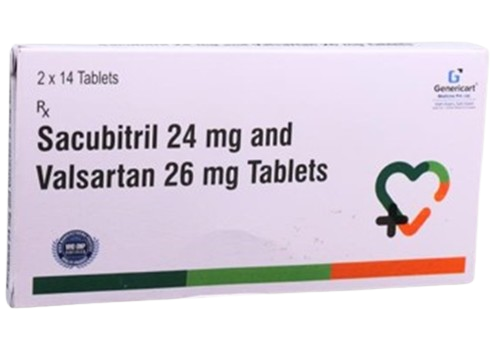
Redefines neurohormonal modulation in heart failure and reduces the risk of cardiovascular death and hospitalization in patients with chronic Heart Failure with Reduced Ejection Fraction (HFrEF).
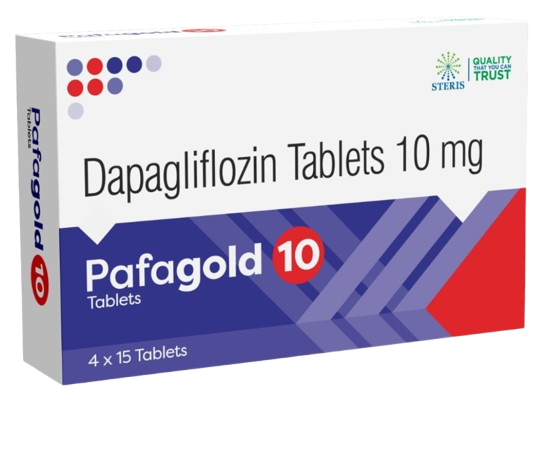
Provides cardiorenal protection and reduces the risk of cardiovascular death and heart failure hospitalization in patients with heart failure.
Reduction in cardiovascular death or heart failure hospitalization compared to enalapril in patients with HFrEF.
Reduction in the composite risk of cardiovascular death or worsening heart failure.
Benefits observed even in patients already receiving mineralocorticoid receptor antagonists and beta-blockers.
Improved glycaemic control
Reduction in blood pressure
Weight reduction
Reduced hospitalization due to heart failure
Sacubitril / Valsartan: Recommended starting dose is one tablet of 49 mg / 51 mg twice daily. The dose should be doubled after 2–4 weeks to the target dose of 97 mg / 103 mg twice daily, as tolerated by the patient.
Dapagliflozin: Recommended dose is 10 mg once daily for heart failure. For type 2 diabetes mellitus, treatment may be initiated at 5 mg once daily and increased to 10 mg once daily if additional glycaemic control is required.
Renal function should be assessed prior to initiation of therapy and monitored periodically. Dapagliflozin is not recommended for glycaemic control in patients with an estimated glomerular filtration rate (eGFR) below 45 mL/min/1.73 m².